- English
- Español
- Português
- русский
- Français
- 日本語
- Deutsch
- tiếng Việt
- Italiano
- Nederlands
- ภาษาไทย
- Polski
- 한국어
- Svenska
- magyar
- Malay
- বাংলা ভাষার
- Dansk
- Suomi
- हिन्दी
- Pilipino
- Türkçe
- Gaeilge
- العربية
- Indonesia
- Norsk
- تمل
- český
- ελληνικά
- український
- Javanese
- فارسی
- தமிழ்
- తెలుగు
- नेपाली
- Burmese
- български
- ລາວ
- Latine
- Қазақша
- Euskal
- Azərbaycan
- Slovenský jazyk
- Македонски
- Lietuvos
- Eesti Keel
- Română
- Slovenski
- मराठी
- Srpski језик

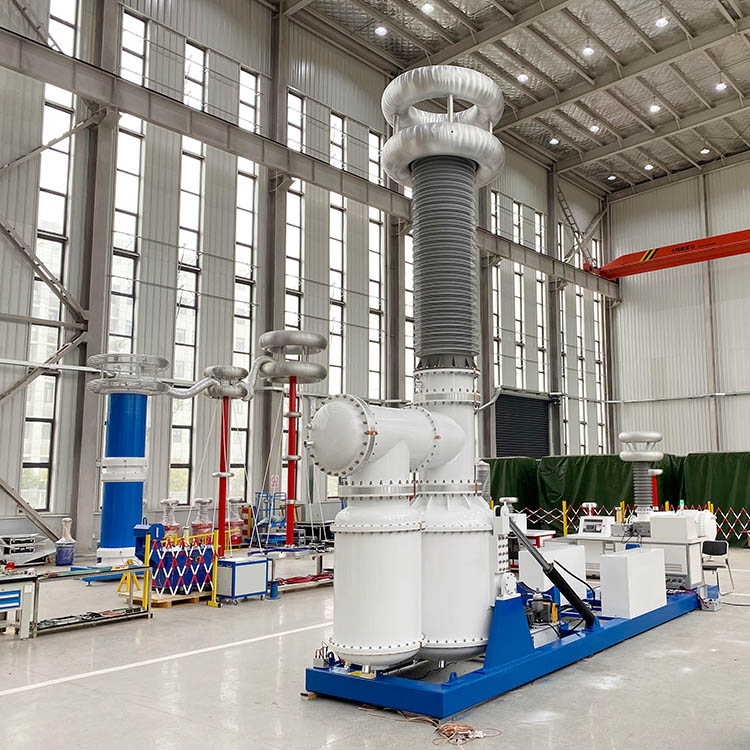
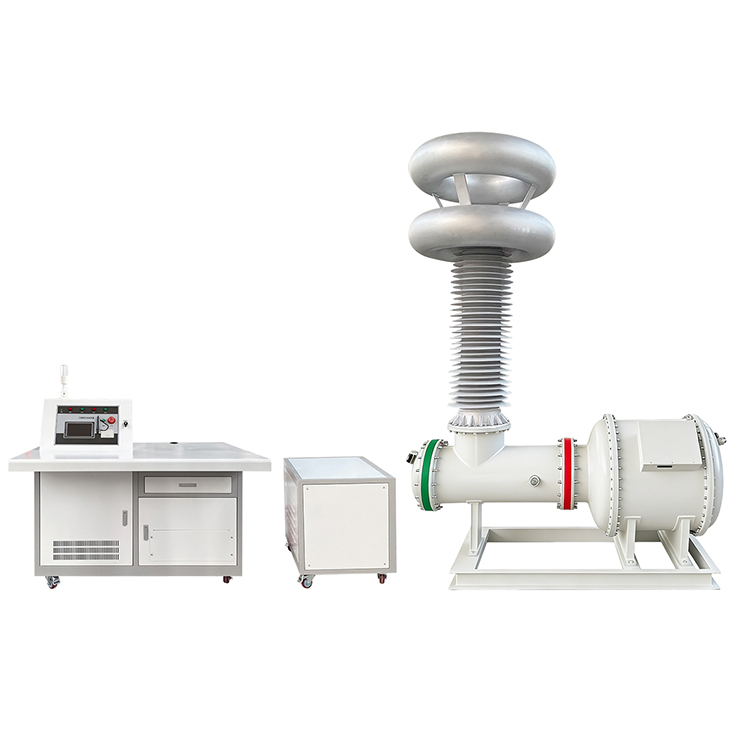
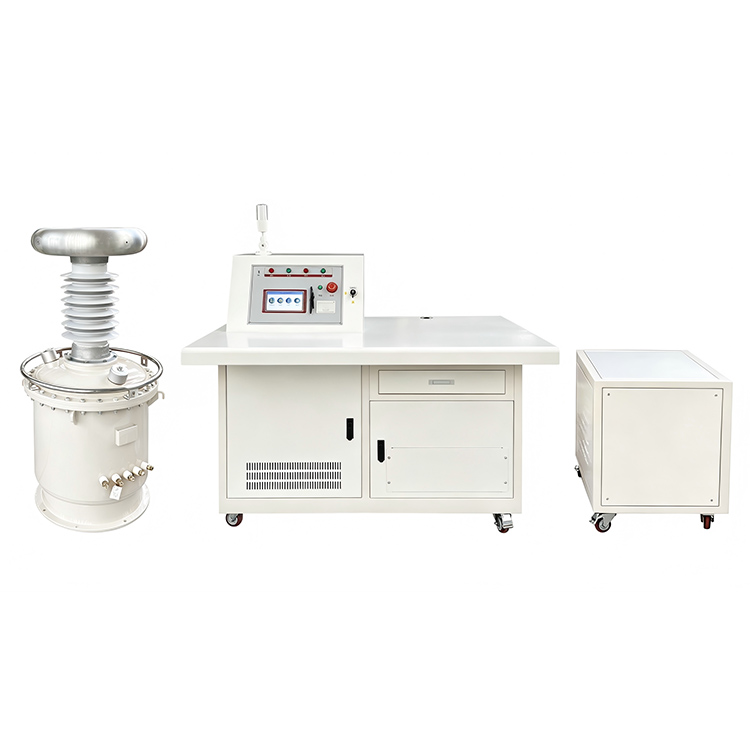
Ultra Low Frequency High Voltage Generator
The quality Ultra Low Frequency High Voltage Generator offered by Weishine,a professional manufacturer in China is a 0.1Hz VLF withstand tester for cables, capacitors, generators and motors. It features adjustable frequencies, auto voltage boost, timing, multi-protection, data storage & printing, widely adopted by power companies, contractors and labs. We offer bulk orders and custom specs for global engineering purchasers.
Model:VS-CDP
Send Inquiry
Product Description
As a professional manufcaturer in China, Weishine would like to provide you high quality Ultra Low Frequency High Voltage Generator, which is designed for AC withstand testing of electrical insulation where conventional power-frequency test equipment would require excessive capacity. In preventive insulation testing, high-voltage withstand testing is one of the most important methods for verifying whether equipment insulation can safely withstand the specified test voltage. For large-capacitance test objects such as XLPE power cables, power capacitors, large generators, and motors, 50 Hz AC withstand testing often requires a large test transformer or resonant test set. A 0.1 Hz ultra-low frequency test system reduces the required test power capacity and makes field testing more practical.Compact and portable design lowers overall procurement cost for field engineering teams.
The test unit generates controlled ultra-low frequency AC high voltage. The available output frequencies are 0.1 Hz, 0.05 Hz, 0.02 Hz, and 0.01 Hz. The lower frequency allows the instrument to test larger capacitive loads while keeping the test equipment size and power demand manageable. According to the manual, the system is especially suitable for electrical equipment with large equivalent capacitance, including power cables, capacitors, medium and large generators, and motors.
Product Components
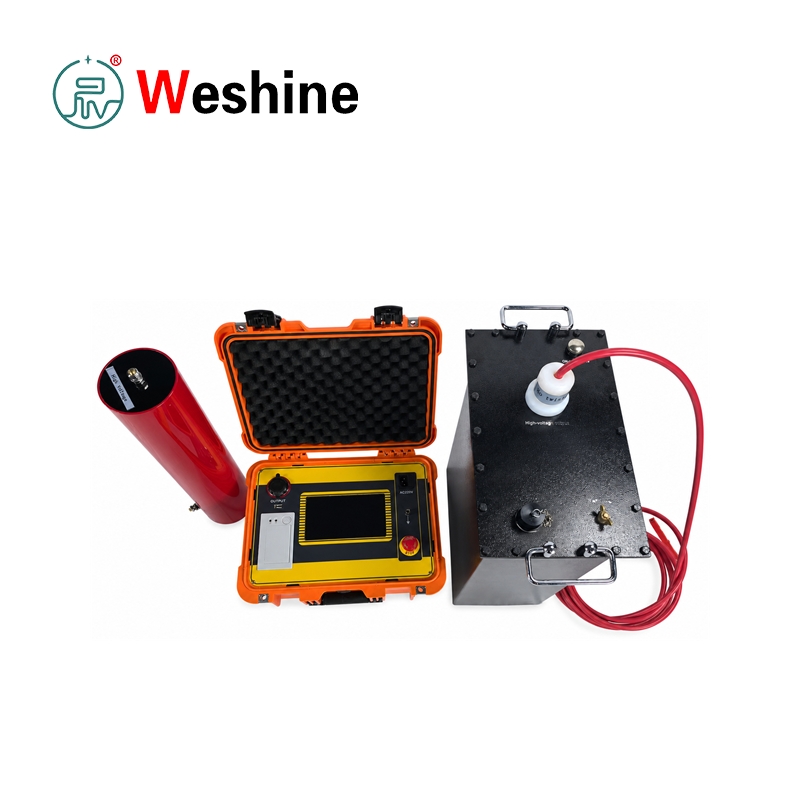
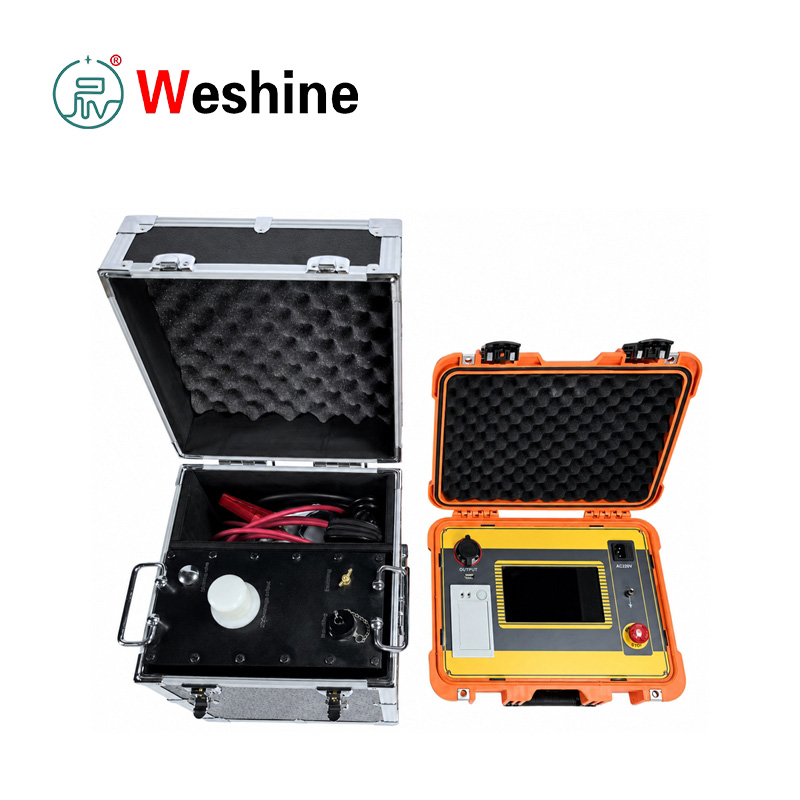
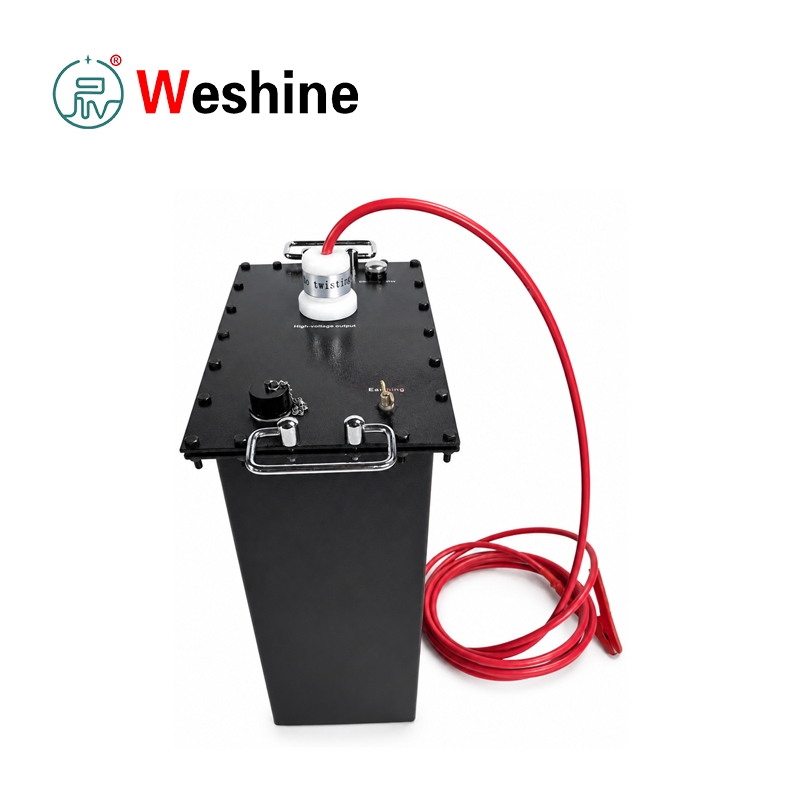
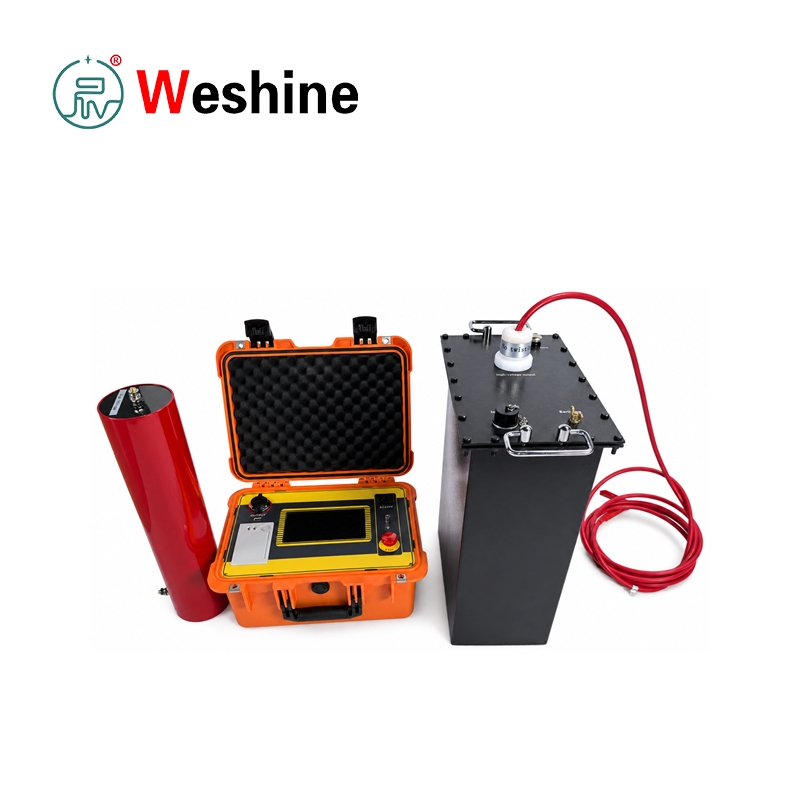
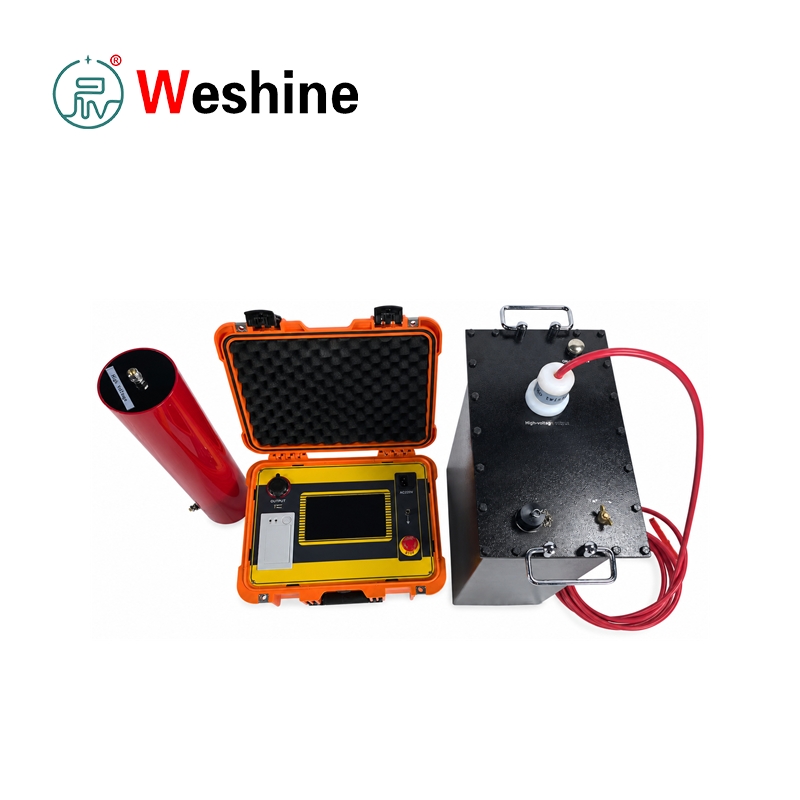
The system consists of two main parts: a controller and a high-voltage booster.
The controller includes a 7-inch capacitive touch screen, power switch, AC 220 V input, grounding terminal, USB communication port, printer, and emergency stop button.
The booster produces the high-voltage output and is connected to the controller through the supplied low-voltage control cable. High-voltage output is connected to the test object using the supplied high-voltage cable and grounding accessories.
Operation is automated
After wiring, the user sets the output frequency, test duration, test voltage, high-voltage side overcurrent limit, and overvoltage limit on the touch screen. When the test starts, the instrument performs load self-check, automatic voltage rise, constant-amplitude output, timing, normal shutdown, and automatic discharge. The instrument can stop by timer or by manual stop. It also provides abnormal shutdown protection through overvoltage and overcurrent protection.
This Ultra Low Frequency High Voltage Generator adopts high-voltage and low-voltage closed-loop negative feedback control. The manual states that the output does not produce capacitive rise effect. Multiple protection functions include overvoltage protection, high-voltage side overcurrent protection, and low-voltage side overcurrent protection, with protection action time not more than 10 ms. The controller and high-voltage generator are connected through low-voltage control, and optical control is used for safer operation. Durable hardware design, long service life for long-term project use and repeated testing.
Test results can be printed directly as a test report. Historical data is saved automatically after normal timer stop, manual stop, overvoltage protection stop, or overcurrent protection stop. The instrument can store up to 64 measurement records; older records are automatically deleted when the storage limit is exceeded. The system also supports date and time setting, Chinese and English interface switching, automatic storage, automatic printing, and USB communication with upper management software.
The test equipment complies with DL/T 849.4-2004, General Technical Conditions for Ultra-Low Frequency High Voltage Generators. The manual also references the 0.1 Hz VLF test method for 35 kV and below XLPE insulated power cables. In field use, the test object capacitance must not exceed the rated capacitive load of the selected instrument configuration. If the test object capacitance is lower than 0.05 μF, an auxiliary 0.05 μF capacitor may be connected in parallel to support normal output.
Product Parameter
|
System Specifications |
Load Capacity |
Series Rating Options |
||||||
|
Item |
Specification |
Output Frequency |
Maximum Capacitive Load |
Model Rating |
Rated Output Voltage |
Load Capacity |
Power Fuse |
Product Structure / Weight |
|
Product model |
VS-CDP |
0.1 Hz |
0.5 μF |
30/1.1 |
30 kV peak |
0.1 Hz ≤0.5 μF; 0.05 Hz ≤1.1 μF; 0.02 Hz ≤2.2 μF; 0.01 Hz ≤5.5 μF |
10 A |
Controller: 4 kg; booster: 20 kg |
|
Product type |
Ultra Low Frequency High Voltage Generator |
0.05 Hz |
1.1 μF |
40/1.1 |
40 kV peak |
0.1 Hz ≤0.5 μF; 0.05 Hz ≤1.1 μF; 0.02 Hz ≤2.2 μF; 0.01 Hz ≤5.5 μF |
10 A |
Controller: 4 kg; booster: 20 kg |
|
Output waveform |
Ultra-low frequency AC high voltage |
0.02 Hz |
2.2 μF |
50/1.1 |
50 kV peak |
0.1 Hz ≤0.5 μF; 0.05 Hz ≤1.1 μF; 0.02 Hz ≤2.2 μF; 0.01 Hz ≤5.5 μF |
15 A |
Controller: 4 kg; booster: 40 kg |
|
Output frequencies |
0.1 Hz, 0.05 Hz, 0.02 Hz, 0.01 Hz |
0.01 Hz |
5.5 μF |
60/1.1 |
60 kV peak |
0.1 Hz ≤0.5 μF; 0.05 Hz ≤1.1 μF; 0.02 Hz ≤2.2 μF; 0.01 Hz ≤5.5 μF |
15 A |
Controller: 4 kg; booster: 50 kg |
|
Measurement accuracy |
3% |
|
|
80/1.1 |
80 kV peak |
0.1 Hz ≤0.5 μF; 0.05 Hz ≤1.1 μF; 0.02 Hz ≤2.2 μF; 0.01 Hz ≤5.5 μF |
15 A |
Controller: 4 kg; booster: 50 kg |
|
Positive and negative peak voltage error |
≤3% |
|
|
90/1.1 |
90 kV peak |
0.1 Hz ≤0.5 μF; 0.05 Hz ≤1.1 μF; 0.02 Hz ≤2.2 μF; 0.01 Hz ≤5.5 μF |
15 A |
Controller: 4 kg; booster: 55 kg |
|
Voltage waveform distortion |
≤5% |
|
|
|
|
|
|
|
|
Operation mode |
Automatic voltage rise, timing, shutdown, discharge |
|
|
|
|
|
|
|
|
Display |
7-inch capacitive touch screen |
|
|
|
|
|
|
|
|
Data storage |
Up to 64 historical test records |
|
|
|
|
|
|
|
|
Printing |
Built-in printer |
|
|
|
|
|
|
|
|
Communication |
USB |
|
|
|
|
|
|
|
|
Applicable standard |
DL/T 849.4-2004 |
|
|
|
|
|
|
|
|
Power Supply |
Protection Functions |
Operating Conditions |
|||
|
Item |
Specification |
Protection Item |
Specification |
Item |
Specification |
|
Input voltage |
220 V ±5% AC |
Overvoltage protection |
User-set limit, 0 to rated value |
Use environment |
Indoor and outdoor |
|
Input frequency |
50 Hz ±5 Hz |
Overcurrent protection |
User-set limit, 0 to rated value |
Operating temperature |
-10°C to +40°C |
|
Portable generator requirement |
Stable 220 V ±5%, 50 Hz; generally more than 3 kW |
Protection action time |
≤10 ms |
Operating humidity |
≤85% RH |
|
|
|
Emergency stop |
STOP button on controller |
|
|
|
|
|
Automatic discharge |
Performed after shutdown |
|
|
|
Storage Conditions |
Standard Accessories |
||||
|
Item |
Specification |
No. |
Item |
Quantity |
Unit |
|
Storage temperature |
-20°C to +60°C |
1 |
Controller |
1 |
Set |
|
Storage humidity |
Relative humidity not more than 85% |
2 |
High-voltage booster |
1 |
Set |
|
Storage environment |
Ventilated indoor area without corrosive gas |
3 |
High-voltage connecting cable |
2 |
Pcs |
|
|
|
4 |
Special low-voltage connecting cable |
1 |
Pc |
|
|
|
5 |
Power cable |
1 |
Pc |
|
|
|
6 |
Discharge rod |
1 |
Pc |
|
|
|
7 |
Grounding cable |
1 |
Pc |
|
|
|
8 |
Compensation capacitor |
1 |
Pc |
|
|
|
9 |
Fuse |
5 |
Pcs |
|
|
|
10 |
Printer paper |
2 |
Rolls |
|
|
|
11 |
User manual |
1 |
Copy |
|
|
|
12 |
Packing list |
1 |
Copy |
|
|
|
13 |
Factory inspection report |
1 |
Copy |
Product Guide
Working Principle of VLF Test Device
The portable VLF test device works by replacing a 50 Hz power-frequency withstand test with an ultra-low frequency AC test.
For capacitive test objects, current is proportional to frequency, capacitance, and voltage. By reducing the frequency to 0.1 Hz or lower, the required test power capacity is greatly reduced while retaining the practical purpose of AC insulation withstand testing.
Equipment Connection Before Testing
Before testing, connect:
according to the wiring diagram in the manual.
The grounding terminal must be connected to earth. The AC input is connected to a 220 V, 50 Hz power source.
If a portable generator is used, the generator output voltage and frequency must be stable.
Parameter Setting and Test Preparation
Power on the controller and enter the parameter setting screen.
Set the following parameters:
Available frequencies include:
Test duration can be set from 0 to 99 minutes.
Voltage and current values shown by the instrument are peak values.
Automatic Test Process
After pressing Start, the instrument performs self-check.
The testing process includes:
- Load self-check
- Automatic voltage rise
- Constant-amplitude output
- Withstand timing
- Automatic shutdown and discharge
If no load is detected, the controller displays a no-load warning.
After reaching the set voltage, the instrument maintains constant-amplitude output and starts the withstand timing process.
When the set time is reached, the system stops high-voltage output and automatically discharges the test object.
Shutdown Modes and Data Management
The instrument supports:
Normal Shutdown
Abnormal Shutdown
In each shutdown mode, the test data is stored as historical data.
Users can:
Cable Testing Guide
For cable testing:
- Disconnect all electrical equipment connected to the cable before testing.
- Measure insulation resistance with a megohmmeter.
- Perform VLF withstand testing only after the insulation check is acceptable.
The manual specifies:
Test duration:
Synchronous Motor Testing Guide
For synchronous motor testing, the manual recommends phase-by-phase testing.
Testing method:
The test time is generally the same as power-frequency withstand testing, commonly:
During testing, operators should observe:
Safety Discharge After Testing
After shutdown, use the discharge rod to fully discharge the test object before removing any cables.
This step is essential, especially for capacitive equipment such as:
Features
1.Supports 0.1 Hz ultra-low frequency AC withstand testing.
2.Supports 0.05 Hz, 0.02 Hz, and 0.01 Hz output frequency selection.
3.Provides automatic voltage rise, constant-amplitude output, timing, shutdown, and discharge.
4.Measures and displays high-voltage output and test current as peak values.
5.Provides overvoltage protection for the high-voltage output.
6.Provides high-voltage side and low-voltage side overcurrent protection.
7.Automatically cuts off output when voltage or current exceeds the set limit.
8.Protection action time not more than 10 ms.
9.Provides 7-inch capacitive touch screen operation.
10.Displays test data and output waveform on the touch screen.
11.Includes automatic historical data storage for up to 64 records.
12.Provides built-in printer for test report printing.
13.Supports USB communication with upper management software.
14.Includes Chinese and English interface switching.
15.Provides closed-loop high-voltage and low-voltage negative feedback control.
16.Supports AC withstand testing of large-capacitance test objects.
17.Includes discharge rod and grounding cable for safe post-test discharge.
18.Provides emergency stop button on the controller.
19.Supports indoor and outdoor operation.
20.Includes compensation capacitor for small-capacitance test objects.
Application Scenarios
Power Utilities
Power utilities use the VLF test equipment for withstand testing of medium-voltage power cables, large motors, generators, capacitors, and other large-capacitance electrical equipment during preventive maintenance and acceptance testing.
Transformer Manufacturers
Transformer and electrical equipment manufacturers can use the test set in test areas where large-capacitance insulation systems require AC withstand verification at reduced frequency.
Power Plants
Power plants use the instrument for withstand testing of generator stator windings, large motors, station service cables, and related insulation systems during commissioning, overhaul, and routine maintenance.
Railways
Railway power supply systems use medium-voltage cables and rotating equipment. The test unit supports field withstand testing during scheduled maintenance outages.
Industrial Plants
Industrial facilities such as mining, petrochemical, steel, and manufacturing plants can use the instrument for cable and motor insulation withstand testing in plant power distribution systems.
Universities
Universities and training centers can use the system for teaching VLF withstand test principles, capacitive current calculation, cable test procedures, and high-voltage safety practice.
Testing Laboratories
High-voltage laboratories can rely on Ultra Low Frequency High Voltage Generator for AC withstand testing of capacitive test objects, cable samples, motors, and insulation systems requiring controlled ultra-low frequency voltage.
Cable Maintenance
Cable maintenance teams use the test device for XLPE cable acceptance tests, preventive tests, fault follow-up checks, and insulation verification after installation or repair.
Applications
1.0.1 Hz VLF AC withstand testing.
2.XLPE power cable withstand testing.
3.35 kV and below cable insulation testing.
4.Power capacitor withstand testing.
5.Medium and large generator insulation testing.
6.Motor stator winding withstand testing.
7.Cable handover testing.
8.Cable preventive maintenance testing.
9.Large-capacitance equipment insulation verification.
10.Field AC withstand testing with reduced test power capacity.
11.Automatic timed high-voltage testing.
12.Overvoltage and overcurrent protected withstand testing.
13.Historical test record storage.
14.Printed test report generation.
15.Insulation condition screening before energization.
Customer Case
Industry: Cable maintenance contractor.
Problem: A maintenance contractor needed to perform acceptance testing on a newly installed medium-voltage XLPE cable. Conventional power-frequency AC withstand equipment was difficult to transport and required higher power capacity because of the cable capacitance. The team needed a portable AC withstand solution suitable for field cable testing.
Testing Process :The technicians disconnected all equipment connected to the cable and first checked each phase with a megohmmeter. After confirming acceptable insulation resistance, they connected the controller, booster, high-voltage output cable, grounding cable, and discharge rod according to the test wiring. The test voltage was set according to the cable phase voltage, and the overcurrent value was calculated from the cable capacitance, test frequency, and voltage. The team selected 0.1 Hz output, set the required test duration, and started automatic voltage rise.
Result :The instrument completed automatic voltage rise, constant-amplitude output, timing, shutdown, and discharge. No destructive discharge, abnormal sound, smoke, odor, unstable voltage, or abnormal current was observed during the withstand period. The test data was stored and printed for the project record.
Benefits :The contractor completed the cable AC withstand test with a smaller and more practical field system. Automatic protection, timing, discharge, storage, and printing helped reduce manual operation and improved test documentation.
FAQ
What is Ultra-Low Frequency High Voltage Generator used for? It is used for VLF AC withstand testing of large-capacitance electrical equipment, especially power cables, power capacitors, generators, and motors.
Why use 0.1 Hz VLF testing instead of 50 Hz AC withstand testing? Large-capacitance test objects require high current at 50 Hz. Reducing the test frequency to 0.1 Hz greatly reduces the required test capacity, making field AC withstand testing more practical.
What output frequencies are available? The test unit supports 0.1 Hz, 0.05 Hz, 0.02 Hz, and 0.01 Hz output frequency settings.
What is the maximum capacitive load? The maximum load is 0.5 μF at 0.1 Hz, 1.1 μF at 0.05 Hz, 2.2 μF at 0.02 Hz, and 5.5 μF at 0.01 Hz.
What protection functions are included? The instrument includes overvoltage protection, high-voltage side overcurrent protection, low-voltage side overcurrent protection, emergency stop, and automatic discharge after shutdown.
Can the test set print test reports? Yes. The built-in printer can print the current test data and historical data shown on the screen.
How many historical records can be stored? The instrument can store up to 64 historical test records. Records older than the latest 64 are automatically deleted.
What safety precautions are required after testing? After shutdown, use the discharge rod to fully discharge the test object before removing any cables. High-voltage testing should be performed only by trained personnel following high-voltage safety procedures.
Weshine Advantages
Weshine Electric provides electrical testing equipment for power utilities, contractors, industrial plants, laboratories, and cable maintenance teams. For VLF withstand testing, Weshine focuses on practical field operation, stable high-voltage output, automatic protection, complete accessories, and clear test documentation. Instruments are supplied with factory inspection records and operation guidance to support reliable use after delivery.
Weshine can assist customers with model selection, cable test voltage setting, load capacitance evaluation, and customized testing requirements. If you seek stable, long-term test equipment, our Ultra-Low Frequency High Voltage Generator can fully satisfy your various on-site testing demands. With engineering experience, quality control, technical support, reliable testing solutions, and international service, Weshine helps users perform cable and large-capacitance insulation testing efficiently and safely. Fast global logistics, multiple payment options for overseas bulk buyers.
Contact Us
|
FEEL FREE TO MAKE A PHONE CALL:400 996 1868 |
OR E-MAIL TO: info@weishengelectric.com |
|
SALES OFFICE Weshine Limited 602, Building 3, Diangu Technology Center, No. 3088, Lekai North Street W/app: +86 1873 1260 588 E. info@weishengelectric.com sale01@weishengelectric.com |
CONTACT OFFICE T.0312 3188565 E. bdweisheng@weishengelectric.com
AFTER-SALES SERVICE T. +86 157 1252 6062 |
Hot Tags: Ultra Low Frequency High Voltage Generator, Buy, China, Manufacturers, Suppliers, Factory, Price, Purpose, Specification, Results, Definition
Related Category
Send Inquiry
Please feel free to give your inquiry in the form below. We will reply you in 24 hours.
Related Products