
- English
- Español
- Português
- русский
- Français
- 日本語
- Deutsch
- tiếng Việt
- Italiano
- Nederlands
- ภาษาไทย
- Polski
- 한국어
- Svenska
- magyar
- Malay
- বাংলা ভাষার
- Dansk
- Suomi
- हिन्दी
- Pilipino
- Türkçe
- Gaeilge
- العربية
- Indonesia
- Norsk
- تمل
- český
- ελληνικά
- український
- Javanese
- فارسی
- தமிழ்
- తెలుగు
- नेपाली
- Burmese
- български
- ລາວ
- Latine
- Қазақша
- Euskal
- Azərbaycan
- Slovenský jazyk
- Македонски
- Lietuvos
- Eesti Keel
- Română
- Slovenski
- मराठी
- Srpski језик

Causes Of Partial Discharge In High Voltage Switchgear
Partial discharge is one of the most important early warning signs of insulation deterioration in high voltage switchgear. Although a partial discharge does not completely bridge the insulation between conductors, repeated discharge activity can gradually damage the insulation system and increase the risk of insulation failure, flashover, and unexpected equipment shutdown.
Understanding the causes of partial discharge helps electrical engineers identify defects at an early stage and improve the reliability of switchgear throughout its service life.
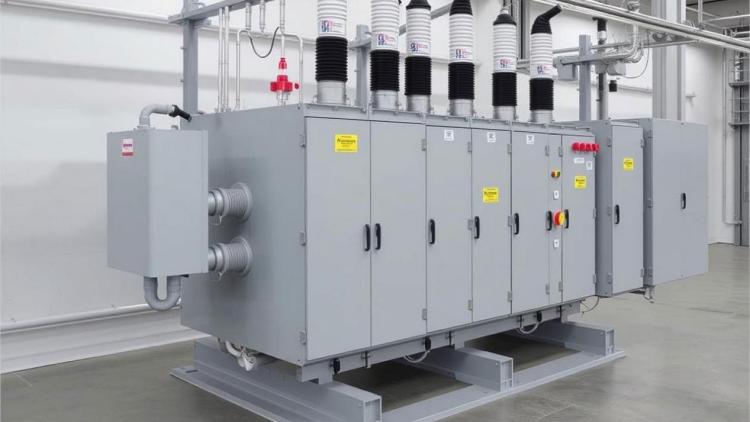
What Is Partial Discharge?
Partial discharge is a localized electrical discharge that occurs in only a portion of an insulation system. It may develop inside a gas-filled void, along an insulation surface, around a sharp conductor edge, or near a defect in a solid or composite dielectric.
The phenomenon is usually associated with a local concentration of electric stress. When the local electric field exceeds the withstand strength of a weak area, a short discharge takes place. The discharge may be brief and small, but repeated activity can progressively weaken the surrounding insulation.
IEC 60270 defines charge-based methods for measuring partial discharge in electrical apparatus, components, and systems tested with AC or DC voltage. The standard also addresses measuring circuits, calibration, digital measurement, and the separation of partial discharge signals from external interference. IEC 60270:2025
How Partial Discharge Damages Insulation
1. Chemical Damage Caused by Charged Particles
During a partial discharge, electrons and ions move through the weak region of the insulation. These high-energy charged particles collide with insulation molecules and can break chemical bonds.
Repeated bombardment may cause:
1、Decomposition of polymer chains
2、Surface erosion
3、Formation of conductive carbonized paths
4、Chemical degradation of epoxy resin and other insulating materials
5、A gradual reduction in dielectric strength
In solid insulation, this process can enlarge an internal cavity or create a treeing channel. Once the defect becomes sufficiently large, the insulation may no longer withstand normal operating voltage or temporary overvoltage.
2. Thermal and Oxidative Damage
Partial discharge also produces localized heat. Although the average energy of an individual discharge may be low, repeated pulses concentrated in the same area can raise the temperature of the surrounding insulation.
The resulting thermal stress may lead to:
1、Local overheating
2、Oxidative cracking
3、Melting or carbonization of polymer materials
4、Loss of mechanical strength
5、Expansion of internal cracks and voids
Thermal damage and chemical damage often reinforce each other. As the insulation surface becomes rougher or more conductive, the local electric field becomes less uniform, which can accelerate further discharge activity.
High Voltage Switchgear and Its Insulation System
High voltage switchgear is a complex assembly that combines conductors, switching devices, busbars, insulation components, grounding enclosures, and control systems.
Depending on the design, typical materials may include:
1、Epoxy resin
2、Silicone or other engineering plastics
3、Air or insulating gas
4、Sulfur hexafluoride in applicable gas-insulated equipment
5、Ceramic or composite insulation
6、Copper, aluminum, and other conductive materials
The combination of different materials and geometries creates multiple locations where partial discharge may occur. Manufacturing quality, assembly accuracy, operating voltage, temperature, humidity, contamination, and insulation aging can all influence PD behavior.
For switchgear applications, the relevant requirements depend on the equipment design and voltage class. The IEC 62271 series covers high voltage switchgear and controlgear, including equipment using solid insulation and insulating gases. IEC 62271 Series
Main Causes of Partial Discharge in High Voltage Switchgear
1. Defects in the Insulation Manufacturing Process
Manufacturing defects are among the most common sources of partial discharge in solid-insulated switchgear.
Internal Voids and Air Bubbles
During epoxy casting, molding, or encapsulation, air bubbles may remain inside the insulation. These voids have a lower dielectric strength than the surrounding solid insulation.
When voltage is applied, the electric field inside the void becomes higher than the average field in the solid material. This is related to the difference between the dielectric constant of the gas inside the void and that of the surrounding insulation.
As a result, the gas in the cavity may break down before the main insulation. Each discharge can enlarge the void, damage its surface, and eventually reduce the overall insulation strength.
Foreign Particles and Material Contamination
Metal particles, dust, moisture, and other impurities introduced during production can create local weak points. Conductive contamination may distort the electric field or form a discharge path between different regions of the insulation.
Typical causes include:
1、Poorly controlled casting conditions
2、Inadequate cleaning before assembly
3、Improper storage of insulation components
4、Insufficient curing of epoxy resin
5、Contamination during transportation or installation
A single internal defect may not cause immediate failure, but it can become more active as the equipment ages or operates under increased electrical stress.
2. Uneven Electric Field Distribution
A uniform electric field is essential for reliable insulation performance. Any sharp point, irregular surface, or floating conductive object can increase the local electric field and initiate partial discharge.
Burrs and Sharp Edges on Conductors
Busbar burrs, sharp corners, unfinished conductor edges, and poorly shaped electrodes can produce a strong electric field concentration.
This effect is particularly significant around:
1、Busbar joints
2、Cable terminals
3、Moving contacts
4、Bolted connections
5、Shielding components
6、Conductive inserts inside molded insulation
Even when the average operating voltage is within the equipment rating, the local field near a sharp edge may exceed the discharge inception level.
Loose or Floating Metal Particles
Metal particles inside the switchgear enclosure can become electrically charged or move under the influence of the electric field. Their position and potential may change during operation, creating unstable field conditions.
Such particles may cause:
1、Local field enhancement
2、Surface discharge
3、Intermittent discharge pulses
4、Tracking on nearby insulation
5、Unstable PD patterns
This is one reason why cleanliness and strict assembly procedures are important during switchgear manufacturing and maintenance.
Contaminated or Rough Insulation Surfaces
Dust, moisture, oil, and other contamination can reduce the effective creepage distance on an insulation surface. A rough or damaged surface also creates small field concentrations where surface discharge can begin.
Surface contamination is especially important in equipment exposed to:
1、High humidity
2、Conductive dust
3、Salt spray
4、Industrial pollution
5、Condensation
6、Poor ventilation
Cleaning alone may not permanently solve the problem if the insulation surface has already developed tracking, cracks, or erosion.
Defects in the Grounded Enclosure
The metal enclosure normally provides shielding and a controlled reference potential. However, rough welds, pores, slag inclusions, and other manufacturing defects may create irregular electric field conditions near the grounded enclosure.
These defects can interact with nearby insulation or conductive parts and increase the risk of discharge. Weld quality, enclosure geometry, grounding continuity, and internal clearances should therefore be checked during manufacturing and inspection.
3. Non-Uniform Dielectric Media
Modern switchgear often uses composite insulation systems in which several materials work together. For example, epoxy resin may be combined with engineering plastics, insulating gas, conductive inserts, and air gaps.
Each material has different electrical and thermal properties. If the interfaces are poorly designed or manufactured, the dielectric field may not be distributed evenly.
Potential problems include:
1、Poor bonding between different insulation materials
2、Uneven dielectric constants
3、Gaps at material interfaces
4、Internal delamination
5、Moisture trapped between layers
6、Voids around embedded conductors
Internal bubbles and impurities can further increase the non-uniformity of the dielectric medium. Under operating voltage, these regions may experience greater electrical stress than the surrounding insulation and become the starting point of partial discharge.
Other Factors That Influence Partial Discharge
Partial discharge is not caused only by manufacturing defects. Several operating and environmental conditions can increase discharge activity.
Operating Voltage
As the applied voltage increases, the electric field in weak regions also increases. A defect that remains inactive at normal voltage may produce measurable discharge during an overvoltage event, a withstand test, or a temporary rise in system voltage.
Temperature
Temperature affects insulation properties, gas pressure, material expansion, and the condition of interfaces. Thermal expansion can enlarge existing gaps or place additional stress on bonded insulation components.
Humidity and Condensation
Moisture can reduce surface insulation resistance and promote surface discharge. Condensation is particularly dangerous when warm, humid air enters a cooler switchgear compartment.
Insulation Aging
Long-term electrical, thermal, and mechanical stress can cause insulation aging. Aging may produce cracks, discoloration, erosion, delamination, and increased moisture absorption, all of which can make partial discharge more likely.
Mechanical Stress and Vibration
Loose connections, vibration, and repeated thermal expansion may create small gaps between insulation components. These gaps can become discharge locations, especially near busbars, cable terminations, and embedded conductors.
Detecting Partial Discharge in Switchgear
PD testing is used to identify discharge activity before it develops into a serious insulation failure. Depending on the equipment and test objective, engineers may evaluate apparent charge, discharge magnitude, phase-resolved patterns, pulse repetition, and changes over time.
A reliable test should include:
1、A suitable measuring instrument and sensor arrangement
2、Proper calibration of the measurement system
3、Effective control of external interference
4、Correct grounding and shielding
5、Stable test voltage and environmental conditions
6、Comparison with technical limits and previous test records
Weshine Electric is a professional manufacturer dedicated to the research, development, and production of high-voltage test and measurement equipment. Equipped with standardized production workshops and independent calibration laboratories, the factory strictly follows IEC standards and ISO quality management systems to ensure every instrument delivers stable, repeatable, and interference-resistant test performance for global power industry applications.
The GDJF-2007 Digital Partial Discharge Tester is independently developed and factory-calibrated by Weshine Electric. It can be used for digital partial discharge measurement and analysis in high voltage equipment. In practical applications, the instrument can support the evaluation of PD magnitude, discharge patterns, and insulation condition. The exact test configuration and acceptance criteria should be selected according to the switchgear design, applicable standards, and the manufacturer’s technical documentation.
Frequently Asked Questions
What is the most common cause of partial discharge in switchgear?
Common causes include internal voids, air bubbles, impurities, sharp conductor edges, surface contamination, poor insulation interfaces, and uneven electric field distribution.
Can partial discharge be seen directly?
Usually, partial discharge cannot be seen during normal operation. It is commonly detected through electrical, ultrasonic, or other specialized measurement methods.
Does partial discharge always mean immediate equipment failure?
No. Partial discharge may develop gradually. However, persistent or increasing PD activity indicates insulation deterioration and requires professional evaluation.
How do sharp busbar edges cause partial discharge?
Sharp edges concentrate the electric field. The local field can become much stronger than the average field, allowing discharge to begin near the edge.
How can partial discharge in switchgear be reduced?
Effective measures include improving insulation manufacturing, removing burrs, controlling cleanliness, preventing moisture, optimizing electric field grading, improving enclosure grounding, and carrying out regular PD testing.
Conclusion
Partial discharge in high voltage switchgear is usually the result of a combination of insulation defects, electric field concentration, non-uniform dielectric materials, environmental conditions, and long-term aging.
Internal voids, impurities, sharp busbar edges, floating metal particles, contaminated surfaces, and poor insulation interfaces can all create local electrical stress. Once discharge begins, chemical erosion and thermal damage may gradually weaken the insulation.
Regular partial discharge testing provides valuable information about insulation condition and helps maintenance teams identify developing problems before a major failure occurs. For accurate diagnosis, testing should be performed by qualified professionals using properly calibrated equipment and procedures consistent with the applicable standards.
Backed by in-house R&D, standardized factory production, and strict quality calibration, Weshine Electric continues to provide reliable high-voltage testing instruments and professional technical solutions for substation maintenance, power grid inspection, and industrial power system diagnosis worldwide. Feel free to contact our team for technical datasheets, customized testing solutions, and factory wholesale support.