
- English
- Español
- Português
- русский
- Français
- 日本語
- Deutsch
- tiếng Việt
- Italiano
- Nederlands
- ภาษาไทย
- Polski
- 한국어
- Svenska
- magyar
- Malay
- বাংলা ভাষার
- Dansk
- Suomi
- हिन्दी
- Pilipino
- Türkçe
- Gaeilge
- العربية
- Indonesia
- Norsk
- تمل
- český
- ελληνικά
- український
- Javanese
- فارسی
- தமிழ்
- తెలుగు
- नेपाली
- Burmese
- български
- ລາວ
- Latine
- Қазақша
- Euskal
- Azərbaycan
- Slovenský jazyk
- Македонски
- Lietuvos
- Eesti Keel
- Română
- Slovenski
- मराठी
- Srpski језик

Why Does Transformer Test Matter More Than Most Teams Expect?
Transformer reliability is rarely judged by appearance alone. A unit may look structurally sound while still hiding winding defects, insulation weakness, ratio deviation, thermal aging, or connection instability that can trigger costly failures later. In practical field work, a well-planned Transformer Test process helps maintenance teams, manufacturers, utilities, EPC contractors, and industrial operators identify hidden risks before they turn into downtime, safety incidents, expensive rework, or customer complaints. This article explains the common pain points behind transformer inspection and commissioning, what should be tested, when to test, and how to make testing more efficient and more dependable. It also shows how Weshine Electric Manufacturing Co., Ltd. supports users who need consistent and practical testing solutions for modern power equipment.
Article Summary
A successful Transformer Test program is not just a technical checkbox. It is a practical way to reduce operating risk, confirm installation quality, shorten troubleshooting time, and protect long-term asset value. From winding resistance and turns ratio checks to insulation and dielectric assessments, every test serves a distinct purpose. The key is to match the method to the actual problem, use stable instruments, and interpret results in context rather than in isolation. Teams that approach testing systematically usually avoid more emergency repairs, fewer project delays, and less uncertainty during commissioning and maintenance.
Contents
- Outline
- What makes Transformer Test essential
- What problems customers usually face
- Which test items deserve priority
- When should a transformer be tested
- How different tests solve different risks
- How to build a more reliable workflow
- Why equipment selection changes the result
- FAQ
- Final call to action
Outline
- The practical value of Transformer Test in real projects
- The most common testing pain points customers want to solve
- The core test categories that support safer decisions
- The best moments for pre-shipment, installation, commissioning, and maintenance checks
- A comparison table showing how each method addresses a different failure risk
- Steps for improving consistency, speed, and confidence in field results
- How Weshine Electric Manufacturing Co., Ltd. fits into this process
What makes Transformer Test essential in real operating conditions?
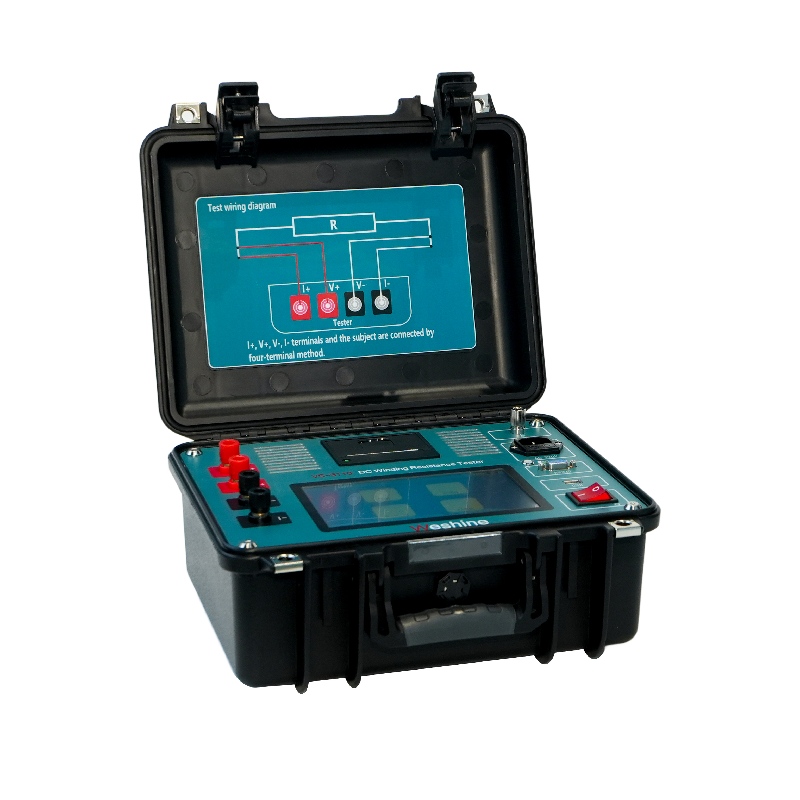
The biggest mistake many buyers make is treating Transformer Test as a formality. In reality, transformers are exposed to transportation stress, installation errors, aging insulation, load fluctuations, moisture, contamination, and internal mechanical movement. Many of these issues are invisible from the outside. A transformer can be energized successfully on day one and still contain defects that shorten service life or trigger unstable performance later.
Testing creates a baseline. That baseline matters because it gives engineers something solid to compare over time. Without it, later troubleshooting becomes a guessing game. Was the problem introduced during transport? Did the winding resistance drift after installation? Has the turns ratio changed? Is the insulation weakening? The purpose of testing is not simply to generate reports. It is to turn uncertainty into measurable evidence.
For manufacturers, testing supports outgoing quality control. For utility and industrial users, it helps confirm acceptance before energization. For maintenance teams, it helps isolate root causes faster. That is why a complete Transformer Test approach has value far beyond a single inspection date.
What problems do customers usually want a Transformer Test to solve?
Most customers are not searching for test equipment just because they want another instrument on the shelf. They are trying to solve specific operational headaches. Those pain points are usually practical, urgent, and expensive when ignored.
- Unclear acceptance status after shipment, storage, or installation
- Unexpected downtime caused by hidden defects that were not detected early
- Slow fault diagnosis when multiple possible causes look similar in operation
- Inconsistent test data due to unstable instruments or unclear procedures
- Project delays because commissioning teams cannot verify readiness quickly
- Maintenance uncertainty when no historical baseline is available for comparison
- Safety concerns related to insulation weakness or abnormal electrical behavior
These are not abstract concerns. Every one of them affects cost, schedule, labor efficiency, and customer confidence. A smarter Transformer Test plan helps teams move from reactive repair to informed prevention.
Which Transformer Test items deserve priority first?
Not every transformer faces the same operating history, so the ideal test combination depends on application, voltage class, service environment, and maintenance objective. Still, several core methods repeatedly prove their value in day-to-day work.
| Test Item | Main Purpose | Typical Problem Detected |
|---|---|---|
| Winding Resistance Test | Verify winding continuity and connection condition | Loose joints, contact issues, abnormal resistance imbalance |
| Turns Ratio Test | Confirm ratio accuracy and tap changer correctness | Shorted turns, wrong tap position, ratio deviation |
| Power Factor or Tan Delta Test | Evaluate insulation condition | Moisture ingress, insulation deterioration, contamination |
| Insulation Resistance Test | Check dielectric integrity quickly | Surface leakage, insulation weakness, aging |
| SFRA or Sweep Frequency Response Test | Assess mechanical condition inside the transformer | Winding displacement, transport damage, deformation |
The most effective strategy is not to rely on one reading alone. A good Transformer Test decision usually comes from combining electrical, insulation, and structural indicators.
When should a transformer be tested to avoid expensive surprises?
Timing changes the value of testing. The same method can support completely different decisions depending on when it is performed. Teams that test only after a fault are already too late to gain the full benefit.
- Before shipment to verify manufacturing quality and document baseline performance
- After transportation to identify damage caused by vibration, impact, or handling stress
- Before commissioning to confirm installation integrity and readiness for energization
- During routine maintenance to track aging and identify drift trends over time
- After a fault event to narrow the failure mechanism and guide corrective action
- After repair or modification to confirm that the unit is safe and stable before return to service
This is where disciplined testing begins to save money. Catching a problem during acceptance is very different from discovering it after energization, collateral damage, outage penalties, or customer complaints.
How do different Transformer Test methods solve different risk scenarios?
A common frustration in the field is knowing that something is wrong, but not knowing which method will reveal it fastest. The table below helps simplify that decision.
| Risk Scenario | Recommended Test Direction | Why It Helps |
|---|---|---|
| Suspected loose connection or abnormal heating | Winding resistance | Highlights imbalance and poor conductive paths |
| Concern about winding damage after transport | SFRA | Detects internal mechanical shift that visual checks miss |
| Possible insulation aging or moisture | Power factor, tan delta, insulation resistance | Gives a clearer view of dielectric condition |
| Tap changer or ratio concern | Turns ratio | Confirms expected electrical transformation relationship |
| General commissioning validation | Combined test package | Reduces blind spots and supports stronger acceptance decisions |
How can teams build a more reliable Transformer Test workflow?
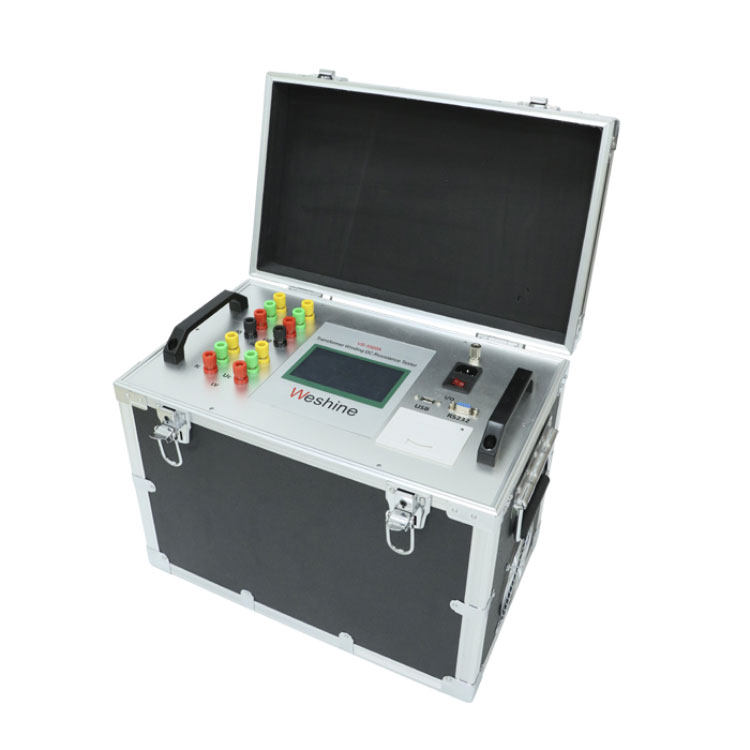
A dependable workflow is about more than owning a tester. It requires planning, consistency, and interpretation discipline. The following practices usually produce better results:
- Define the objective before testing begins instead of collecting random data
- Record environmental and operational context for better comparison later
- Use the same procedure sequence across similar assets whenever possible
- Keep a stable baseline from factory, acceptance, and maintenance stages
- Compare abnormal values with history, phase balance, and related indicators
- Train operators not only to run the instrument but also to understand result meaning
- Choose equipment that reduces setup confusion and supports repeatable readings
When these steps are ignored, teams often end up with reports but no confidence. When they are followed, Transformer Test becomes a decision tool instead of a paperwork exercise.
Why does the right equipment partner make such a big difference?
Even a strong test plan can break down if instruments are difficult to operate, unstable in the field, or poorly aligned with the actual tasks engineers face. Buyers usually want equipment that is accurate, practical, durable, and easy to integrate into real commissioning and maintenance routines.
Weshine Electric Manufacturing Co., Ltd. offers a broad range of transformer-related test categories, including winding resistance, turns ratio, insulation-related checks, and other electrical testing solutions designed for professional use. That broader product direction is helpful for users who want more than a single isolated device and prefer a more complete approach to transformer diagnostics and support.
In real projects, the right supplier adds value through product consistency, clearer application matching, stable output, responsive support, and equipment that fits the workflow technicians already use. That combination matters because every field team wants the same thing in the end: faster judgment, fewer doubts, and a more reliable asset.
FAQ
1. Is one Transformer Test enough to confirm a unit is healthy?
Not usually. One method may reveal one category of problem, but transformers can fail for electrical, insulation, mechanical, or connection-related reasons. A combined testing approach usually produces a more trustworthy conclusion.
2. Which test is most useful during commissioning?
That depends on the project and transformer type, but winding resistance, turns ratio, and insulation-related checks are commonly prioritized because they quickly support installation and readiness validation.
3. Can Transformer Test help after transportation?
Yes. Transportation can introduce hidden internal stress or displacement. Post-shipment testing helps verify whether the transformer still matches expected baseline condition before it is energized.
4. Why do test results sometimes look inconsistent?
Inconsistency can come from unstable procedures, environmental influence, operator differences, poor lead connections, or instruments that are not ideal for the application. Consistent workflow and proper equipment selection help reduce this problem.
5. How often should a transformer be tested?
There is no single answer for every asset. Testing frequency depends on criticality, load profile, operating environment, maintenance philosophy, and event history. The most effective programs combine acceptance testing, periodic maintenance, and event-driven checks when conditions change.
Need a more dependable Transformer Test solution?
If your team is looking for a more practical way to verify transformer condition, speed up commissioning, reduce diagnostic uncertainty, and improve confidence in every test result, now is the right time to take the next step. Contact us to learn how Weshine Electric Manufacturing Co., Ltd. can help you choose the right Transformer Test solution for your application and support your project with equipment built for real field demands.