
- English
- Español
- Português
- русский
- Français
- 日本語
- Deutsch
- tiếng Việt
- Italiano
- Nederlands
- ภาษาไทย
- Polski
- 한국어
- Svenska
- magyar
- Malay
- বাংলা ভাষার
- Dansk
- Suomi
- हिन्दी
- Pilipino
- Türkçe
- Gaeilge
- العربية
- Indonesia
- Norsk
- تمل
- český
- ελληνικά
- український
- Javanese
- فارسی
- தமிழ்
- తెలుగు
- नेपाली
- Burmese
- български
- ລາວ
- Latine
- Қазақша
- Euskal
- Azərbaycan
- Slovenský jazyk
- Македонски
- Lietuvos
- Eesti Keel
- Română
- Slovenski
- मराठी
- Srpski језик

Common Knowledge About Power Cables: Types, Sizes, Colors, And Applications
Power cables are essential components in residential, commercial, and industrial electrical systems. Choosing the correct conductor type and cross-sectional area is important for electrical safety, voltage stability, heat control, and long-term system reliability.
Common cable choices include BV, BVR, BVV, and BVVR wires. Although these cables may look similar, they differ in conductor construction, flexibility, insulation structure, and installation suitability.
This guide explains the basic knowledge of common power cables and provides practical references for selection and installation.
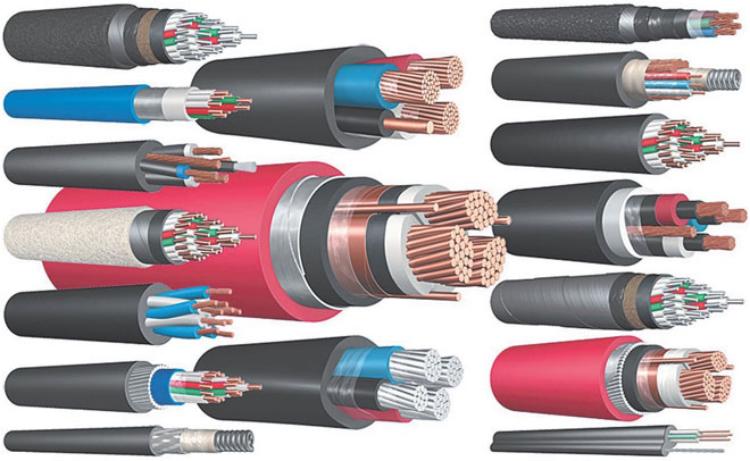
1. Common Types of Power Wires
BV Single-Core Wire
BV wire is a copper conductor with PVC insulation. It normally uses a single solid conductor, which gives the wire good mechanical strength and a relatively stable shape.
Typical applications include:
1、Fixed wiring in buildings
2、Distribution boards
3、Lighting circuits
4、Wall conduits
5、Electrical control panels
BV wire is generally economical and suitable for straight, fixed installations. However, it is less flexible than stranded wire and may be more difficult to bend repeatedly in complicated wiring routes.
BVR Flexible Multi-Strand Wire
BVR wire uses multiple fine copper strands covered with PVC insulation. Compared with BV wire of the same cross-sectional area, BVR is more flexible and easier to route through conduits, junction boxes, and distribution panels.
Its advantages include:
1、Flexible copper conductor
2、Easier installation in confined spaces
3、Reduced risk of conductor breakage during bending
4、Convenient connection to terminals
5、Suitable for complex hydropower and building wiring
BVR wire is often slightly more expensive than BV wire because its manufacturing process uses multiple copper strands. In many markets, the price difference is approximately 5%, although the actual price depends on copper prices, insulation material, cable length, and manufacturer.
BVV Double-Insulated Solid Wire
BVV wire generally refers to a solid copper conductor with PVC insulation and an additional outer PVC sheath. The double-insulation structure provides increased mechanical protection compared with a single-insulated wire.
It may be used for:
1、Fixed indoor wiring
2、Exposed or surface-mounted installations
3、Equipment connections
4、Areas requiring additional sheath protection
The exact construction and permitted application should be confirmed from the manufacturer’s datasheet because cable designations may vary between regions.
BVVR Double-Insulated Flexible Wire
BVVR combines a stranded copper conductor with insulation and an outer sheath. It is more flexible than BVV and can be used where the cable must be routed around corners or connected to equipment with limited installation space.
Typical applications include:
1、Flexible fixed wiring
2、Equipment power connections
3、Control cabinet wiring
4、Electrical installations requiring additional outer protection
For international projects, always verify the cable designation against the relevant IEC, national, or regional standard. PVC-insulated cables rated up to 450/750 V are covered by the IEC 60227 series. IEC 60227-1:2024
Weshine Electric, as a professional manufacturer of low-voltage power cables and electrical wiring products, strictly follows IEC 60227 and national electrical manufacturing standards for the mass production of BV, BVR, BVV, BVVR series cables. Equipped with automated wire stranding, extrusion molding, and quality inspection production lines, the factory implements full-process quality control from raw material incoming inspection to finished product delivery. All cables adopt high-purity oxygen-free copper cores and flame-retardant PVC insulation materials, with stable conductivity, strong bending resistance, excellent flame retardant and aging resistance, fully meeting residential, commercial, industrial and international engineering wiring safety standards.
2. Common Cable Cross-Sectional Areas
Cable size is normally expressed by the conductor cross-sectional area in square millimeters, written as mm². The notation “㎡” is incorrect for conductor size because it means square meters.
Common household and construction cable sizes include:
1.0 mm²
1.5 mm²
2.5 mm²
4 mm²
6 mm²
10 mm²
The cross-sectional area affects the cable’s current-carrying capacity, voltage drop, mechanical strength, and heat dissipation.
A larger conductor generally has lower resistance and can carry more current. However, cable selection cannot be based on cross-sectional area alone. Installation method, ambient temperature, conductor grouping, insulation type, cable length, voltage drop, and protective device rating must also be considered.
The current-carrying capacity of a conductor is the maximum current it can carry continuously under specified installation conditions. Real installation conditions may require correction factors. Electrical Installation Guide: Conductor Sizing
3. Reference Weight of Common Wires
The approximate reference weights of finished wire bundles may be used for procurement and incoming inspection.
| Conductor Size | Approximate Reference Weight |
| 1.5 mm² | About 2.2 kg |
| 2.5 mm² | About 3.3 kg |
| 4 mm² | About 4.8 kg |
| 6 mm² | About 6.8 kg |
These values are for reference only. Actual delivery weight may vary according to:
1、Copper purity and density
2、Insulation thickness
3、Outer sheath thickness
4、Manufacturing tolerance
5、Cable length
6、Packaging method
The finished cable length should also be checked during procurement. Buyers should confirm the conductor material, cross-sectional area, insulation type, rated voltage, length tolerance, and test certificate rather than relying on weight alone.
4. Allowable Current of Copper-Core Wires
Approximate current values are sometimes used as a quick reference for household wiring. For example:
1、A 1.5 mm² copper-core wire may carry approximately 8–15 A.
2、A 4 mm² copper-core wire may carry approximately 25–32 A.
These ranges should not be treated as universal design values. The actual allowable current depends on whether the cable is installed in a conduit, surface-mounted, buried, bundled with other conductors, or exposed to a particular ambient temperature.
Cable sizing should be coordinated with the circuit breaker or fuse. The protective device must protect the conductor from overload and short-circuit damage.
For a final design, consider:
1、Design current of the connected load
2、Cable installation method
3、Ambient temperature
4、Number of loaded conductors
5、Cable length and voltage drop
6、Short-circuit withstand capability
7、Protective device rating
8、Local electrical installation regulations
The old GB 4706.1 references sometimes used in historical household wiring materials relate primarily to the safety requirements of household and similar electrical appliances. They should not be used as the sole basis for modern cable sizing. The current edition listed by China’s national standards platform is GB/T 4706.1-2024. National Standards Information Public Service Platform
5. Cable Color Coding and Applications
Correct color coding helps electricians identify the function of each conductor and reduces the risk of wiring errors.
Protective Earth Conductor
The protective earth conductor is normally identified by a fixed yellow-green color combination. This conductor is connected to exposed conductive parts and provides a low-impedance path for fault current.
The yellow-green conductor should not be used as a phase or neutral conductor.
Neutral Conductor
The neutral conductor should use the color specified by the applicable national or project wiring standard. In many systems, blue is commonly used for neutral conductors, but color conventions can vary.
Before connecting a conductor based on color alone, verify the circuit with the wiring diagram and appropriate electrical test equipment.
Line or Live Conductors
Line conductors may use brown, black, gray, or other colors depending on the wiring system and local regulations. A consistent color scheme should be used throughout the installation.
Color identification is a safety aid, not a substitute for testing. Always confirm that a circuit is de-energized before handling it.
6. Matching Cable Sizes to Household Applications
The correct conductor size depends on load current and installation conditions. The following examples are common practical references, but they should be checked against local regulations and the actual load.
Lighting Circuits
Lighting circuits often use 1.5 mm² copper wire. The final selection depends on the circuit length, lighting load, installation method, and protective device.
General Socket Circuits
A 2.5 mm² single-core copper wire is commonly used for ordinary household socket circuits. If several high-power appliances will operate on the same circuit, the circuit may require a larger conductor or separate dedicated circuits.
Household Main Incoming Cable
A 6 mm² single-core copper wire is often used as a reference for a household incoming supply. However, the appropriate size depends on the contracted supply capacity, main breaker rating, cable length, installation method, and local utility requirements.
Air-Conditioning Circuits
Air conditioners and other high-power appliances should normally use dedicated circuits. A 4 mm² conductor may be suitable for certain applications, but the required size must be calculated from the appliance rated current, starting characteristics, cable length, and installation conditions.
7. How Household Circuit Design Has Changed
Before around 2000, a common household wiring arrangement was:
1、Main incoming cable: 4–6 mm²
2、Lighting circuit: 1.5 mm²
3、Socket circuit: 2.5 mm²
4、Dedicated air-conditioning circuit: 4 mm²
This arrangement was based on the typical electrical loads and household appliances of that period.
Modern homes often have higher total demand because of induction cookers, electric water heaters, heat pumps, air conditioners, washing machines, dryers, electric vehicle chargers, and other high-power equipment.
Current circuit design should therefore be based on the actual load profile rather than simply copying older practices. Separate circuits, residual-current protection, surge protection, and appropriate earthing may also be required.
8. How to Choose the Right Power Wire
When selecting a power wire, check the following specifications:
1、Conductor material
2、Solid or stranded construction
3、Cross-sectional area
4、Rated voltage
5、Insulation material
6、Outer sheath structure
7、Temperature rating
8、Flame-retardant performance
9、Applicable product standard
10、Manufacturer test certificate
11、Cable length and tolerance
Choose BV when the installation is fixed and relatively straight. Choose BVR when flexibility is important during routing and termination. Use sheathed products such as BVV or BVVR where additional mechanical protection is required.
For safety-critical installations, cable selection and installation should be completed or verified by a qualified electrician.
Frequently Asked Questions
What is the difference between BV and BVR wire?
BV uses a solid copper conductor, while BVR uses multiple fine copper strands. BV is more rigid and economical; BVR is more flexible and easier to install in complex wiring routes.
What does 2.5 mm² mean?
It refers to the cross-sectional area of the conductor, not the outside diameter of the cable. A larger cross-sectional area generally provides lower resistance and greater current-carrying capacity.
Is 1.5 mm² wire suitable for sockets?
It may be suitable for some lightly loaded circuits, but ordinary household sockets commonly use 2.5 mm² conductors. The correct choice depends on the circuit design, load, protection, and local regulations.
Can cable size be selected only according to current?
No. Installation method, temperature, voltage drop, grouping, cable length, insulation type, and protective device rating must also be considered.
Why is BVR wire more expensive than BV wire?
BVR uses multiple fine copper strands and generally requires a more complex manufacturing process. Its price may be slightly higher, although the actual difference varies by supplier and market conditions.
Conclusion
Standardized selection and application of power cables are the foundation of safe and stable operation of all low-voltage electrical systems. BV, BVR, BVV, and BVVR cables have their own applicable scenarios: solid BV wire is economical and durable for fixed laying, flexible BVR wire adapts to complex construction environments, and double-sheathed BVV/BVVR wires provide enhanced environmental protection and mechanical protection.
Common specifications such as 1.5 mm², 2.5 mm², 4 mm² and 6 mm² cover most household, commercial and civil engineering wiring needs, but the final scheme must be based on professional engineering calculation and local electrical specifications, rather than empirical copying.
As a reliable manufacturer of low-voltage power cables, Weshine Electric adheres to strict ISO quality management system and IEC international standard production specifications. All series of wires and cables undergo multi-process quality inspection including conductor purity detection, insulation pressure resistance test, flame retardant test and aging test before leaving the factory. With stable product performance, high safety factor and strong environmental adaptability, our cables provide standardized, safe and durable wiring solutions for global residential decoration, commercial construction and industrial electrical projects, supporting one-stop factory supply and professional technical guidance.